
We have all been there: you buy a pair of pretty earrings, wear them happily for two weeks, and then one morning they look dull, dark, almost black. You wonder — what is anti-tarnish jewellery, and why didn't anyone tell me about it sooner? This guide explains, in simple words, why regular jewellery turns black, what "anti-tarnish" actually means, and how to spot the real thing so your next favourite pair stays shiny.

Why does jewellery tarnish?
Tarnish is just chemistry meeting your daily life. Most cheap fashion jewellery is made from brass or copper alloys with a very thin layer of gold or silver plating on top. Four everyday things attack it:
- Sweat — salt and moisture react with the base metal underneath the plating.
- Perfume and deodorant — alcohol and chemicals eat through thin plating surprisingly fast.
- Humidity — monsoon air in India is brutal on low-quality plating.
- Air itself — sulphur compounds in the air slowly darken exposed metals.
Once the thin plating wears off at the edges, the dark base metal shows through — and no amount of polishing brings back the original shine, because the gold layer is simply gone.
What "anti-tarnish" actually means
Anti-tarnish jewellery fights the problem at the base, not just the surface. Three things make it different:
- A 316L stainless steel base. 316L is a surgical-grade steel that forms its own invisible protective layer (chromium oxide). It does not rust, and it does not react with sweat the way brass or copper does.
- Thicker, better plating. Instead of a flash of gold that wears off in weeks, quality anti-tarnish pieces use a proper gold plating over the steel, so the colour stays even with daily wear.
- Skin-friendly build. 316L is nickel-safe and hypoallergenic for most wearers, which is why anti-tarnish earrings rarely cause the itching that cheap studs do.
One honest note: "anti-tarnish" means resists tarnish — it does not make jewellery immortal. Perfume sprayed directly on a piece, or months in a damp box, can still dull the surface. But compared to regular fashion jewellery that dies in 2–3 weeks, the difference is night and day.

Anti-tarnish vs regular fashion jewellery
| Feature | Regular fashion jewellery | Anti-tarnish (316L) jewellery |
|---|---|---|
| Base metal | Brass / copper alloy | 316L stainless steel |
| Plating | Very thin flash plating | Thicker gold plating |
| Tarnish resistance | Turns dark in weeks | Resists tarnish for months of daily wear |
| Water & sweat | Avoid completely | Water/sweat resistant |
| Sensitive skin | Often causes itching | Hypoallergenic, nickel-safe |
| Typical price (India) | ₹99–₹299 | ₹349–₹599 |
How to tell if jewellery is really anti-tarnish
Anyone can print "anti-tarnish" on a listing. Use this quick checklist before you buy:
- ✅ The base metal is named — look for 316L stainless steel, not just "metal alloy".
- ✅ It says nickel-free / hypoallergenic — a good sign the maker thought about skin.
- ✅ The brand gives care guidance — honest brands tell you the limits instead of promising magic.
- ✅ The price makes sense — real 316L pieces with proper plating rarely sell for ₹99.
- ✅ Reviews mention long-term wear — "still shiny after 3 months" beats "looks pretty" any day.
At Anisan, every piece is built on 316L stainless steel with an anti-tarnish finish, and priced between ₹349 and ₹499 — because everyday jewellery should survive everyday life.
New to anti-tarnish jewellery?
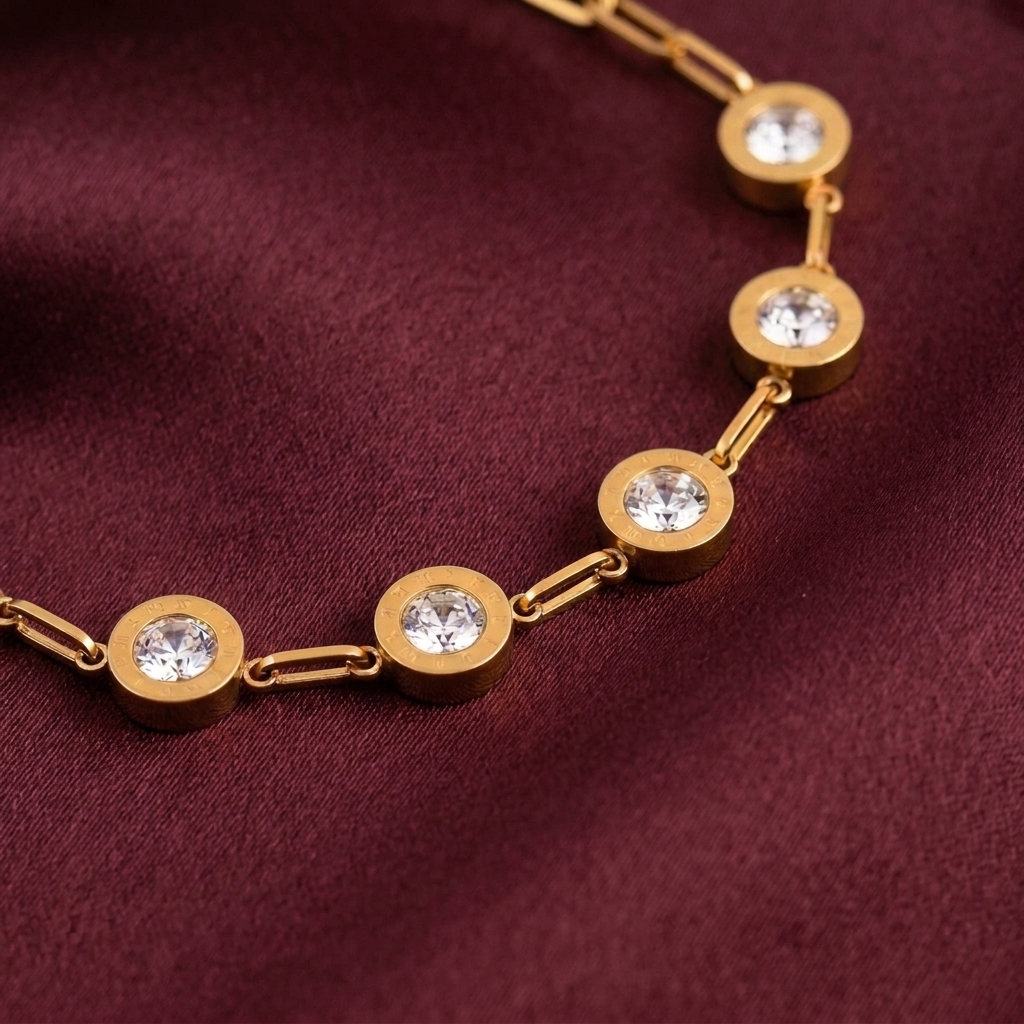
Start with the pieces made for daily wear — earrings that won't itch and bracelets that survive your routine.
Shop this look


Frequently asked questions
Does anti-tarnish jewellery turn green?
Can I wear anti-tarnish jewellery every day?
How long does anti-tarnish jewellery last?
Is anti-tarnish the same as waterproof?
Everyday jewellery that keeps up with you
316L stainless steel, anti-tarnish finish, skin-friendly — all under ₹500.